Scale a brand for developers
Creative production and brand systems for IBM TechXchange

We’re launching a new brand. It still needs to feel like IBM, but we want it to have more energy and feel closer to the developer community.”
IBM TechXchange
We joined IBM TechXchange in 2023. The brand was new. It already had a lot to carry.
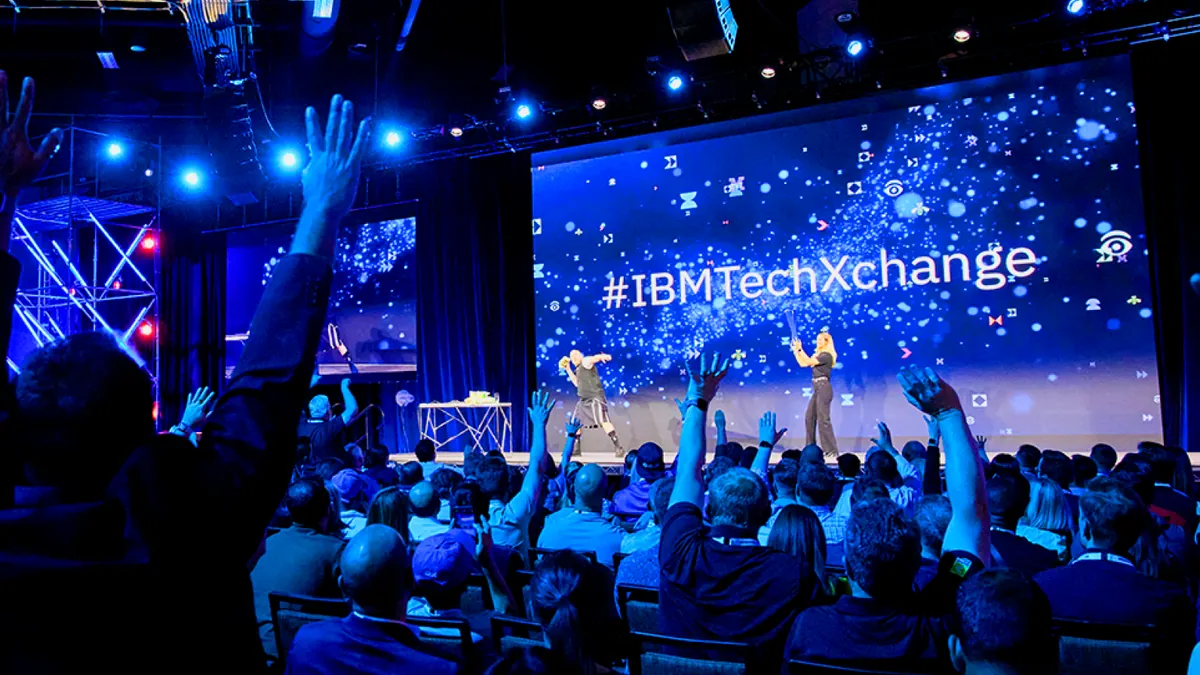
TechXchange brought together IBM users, developers and technologists through community programs, training, credentials, events and a flagship conference. Different audiences and different needs all had to work under one name.
One name, many programs
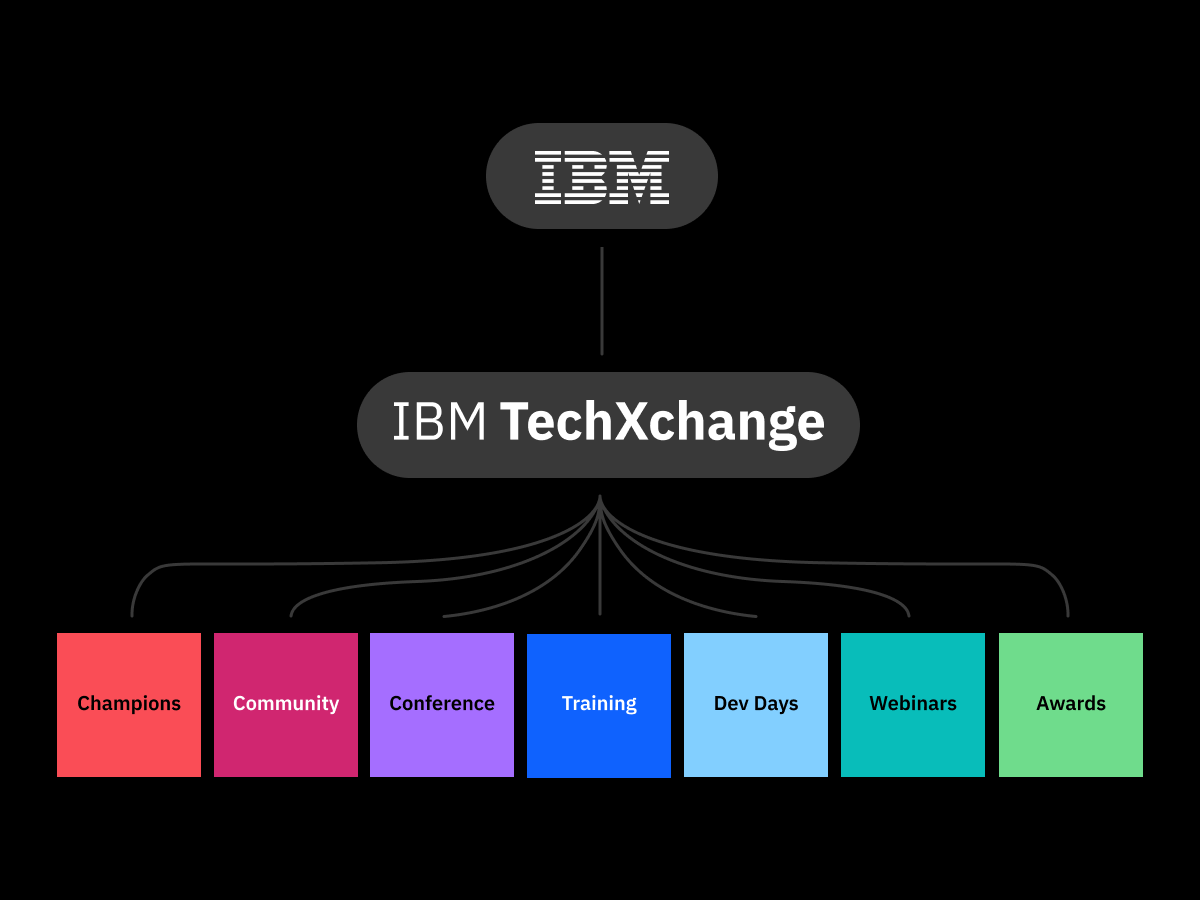
TechXchange covered IBM Champions, user groups, the conference, training and credentials, Dev Days, hackathons, bootcamps, webinars and awards. Each program had its own audience, calendar and needs. Each had to feel like TechXchange while still being recognizably its own thing.
Sometimes that difference came through color, sometimes icons or photography, often a mix of all three. Every piece had to hold three layers at once: the character of the program, the TechXchange identity and the wider IBM brand underneath.
And it was growing fast
TechXchange was already serving a large community, while the flagship conference kept growing. The brand system had to keep pace without turning every new request into a new visual direction.
- 500k+ members of the IBM TechXchange Community
- 250+ user groups across the community
- 7.9k+ attendees at the 2025 conference
- +160% conference attendance, 2023 to 2025
The system grew with the work
The first request was a presentation template. We didn’t try to design the whole system upfront. We let the work show us what the system needed.
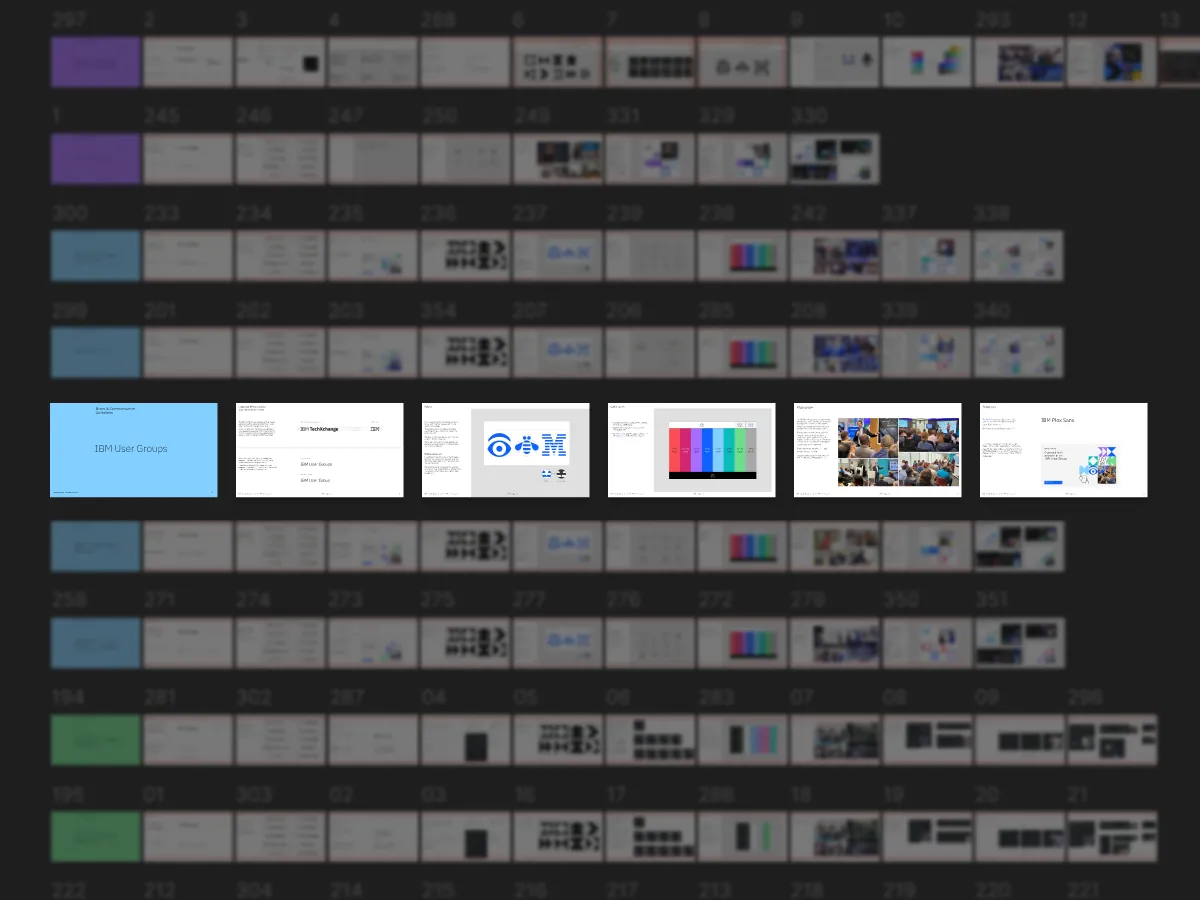
A campaign asset would reveal a gap in the guidelines, so the guidelines grew. A new program needed its own look, so a toolkit was added. Over three years, that became a toolkit for TechXchange as a whole, program toolkits underneath it, and templates IBM teams and partners could use without us.
We also kept the current assets in one place, so nobody had to ask which version was right.
Different jobs, same brand
A campaign often started on one piece. We would bring a few directions, the IBM team would make the call, and then we would build the chosen one out across everything the campaign needed.
Social tiles, email banners, why-attend flyers, one-pagers and website assets. Then the next campaign, and the next program.
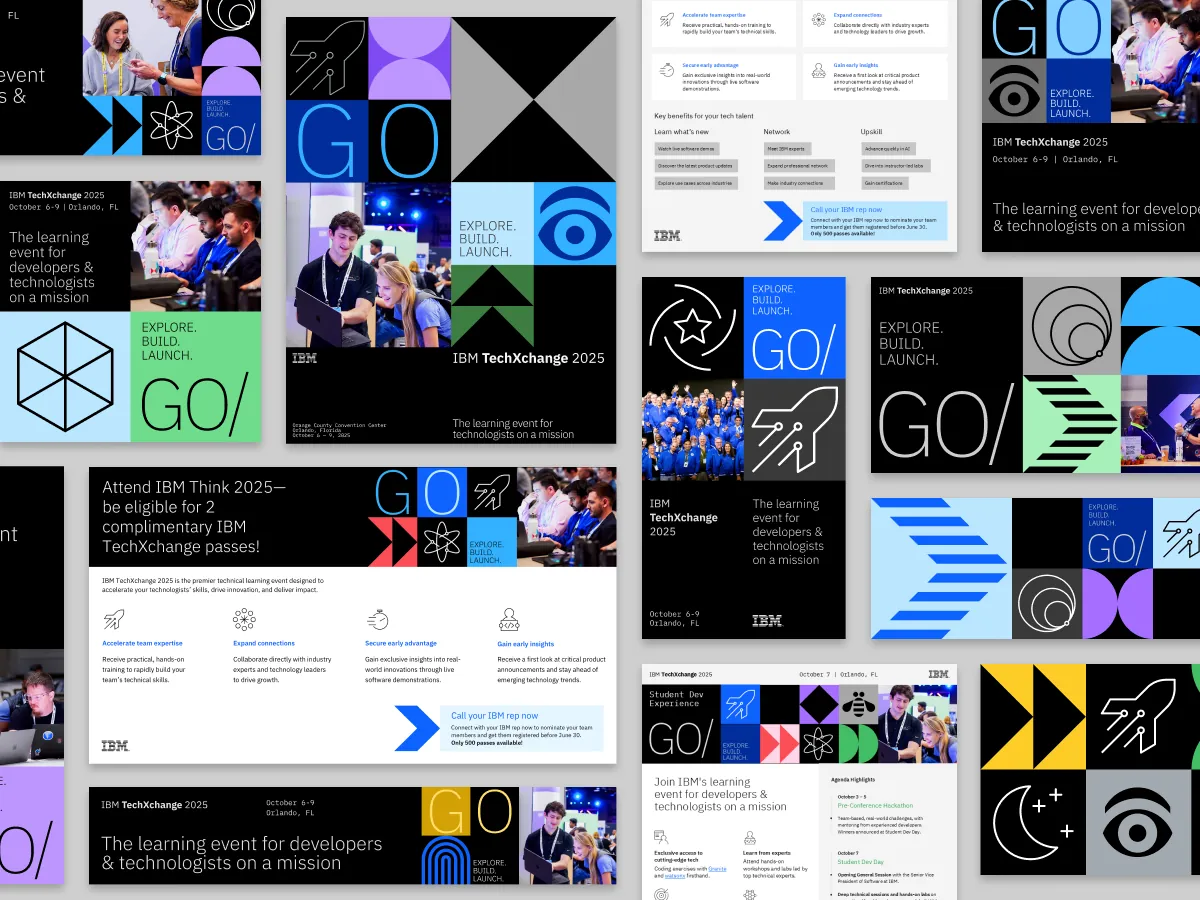
The jobs kept changing. The brand couldn’t.
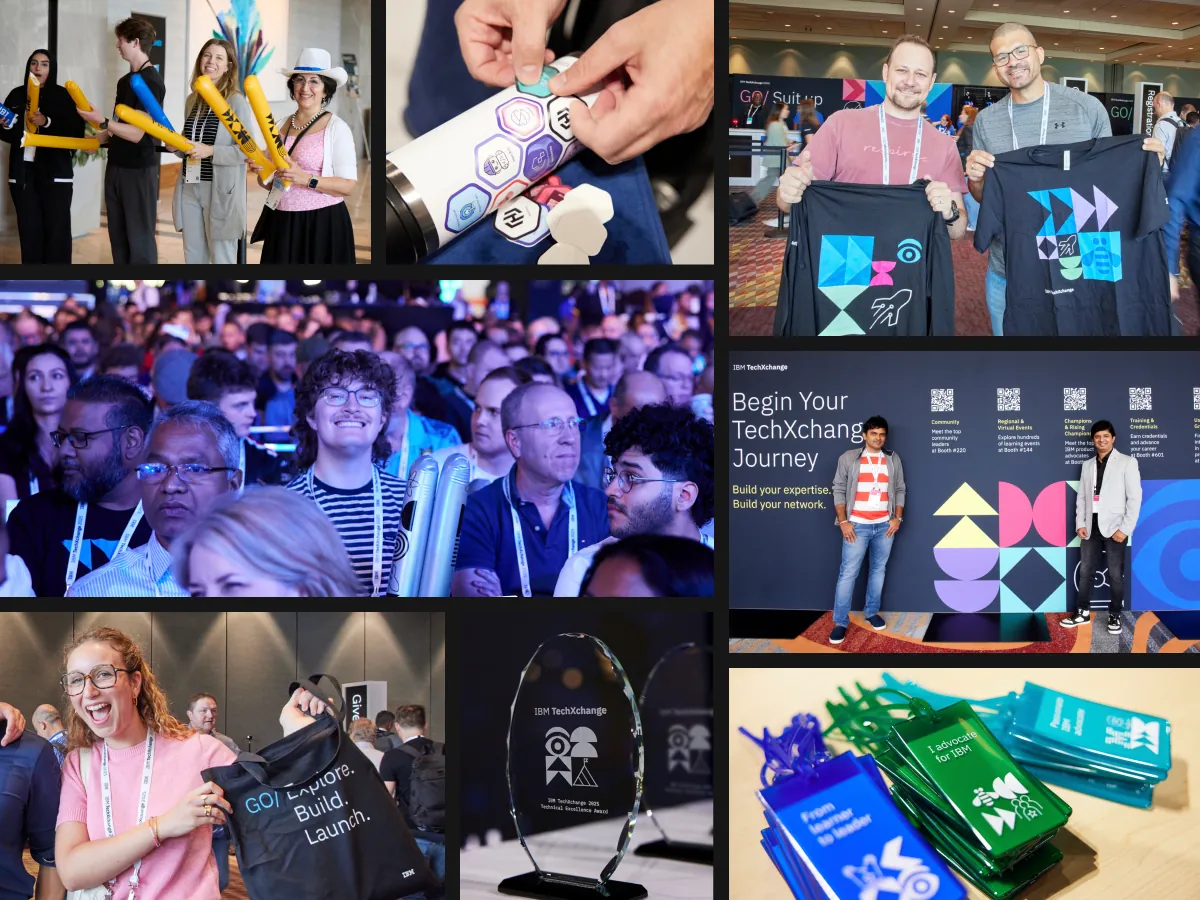
Over three years, the work went far beyond campaign assets: a conference opening deck, a training and certification badge system, identities for hackathons and Dev Days, infographics, presentation templates, print and event merch, an award, stickers, a 3D animation, an LED-wall video edit and even a patch for a space suit.
Sometimes the work needed words too
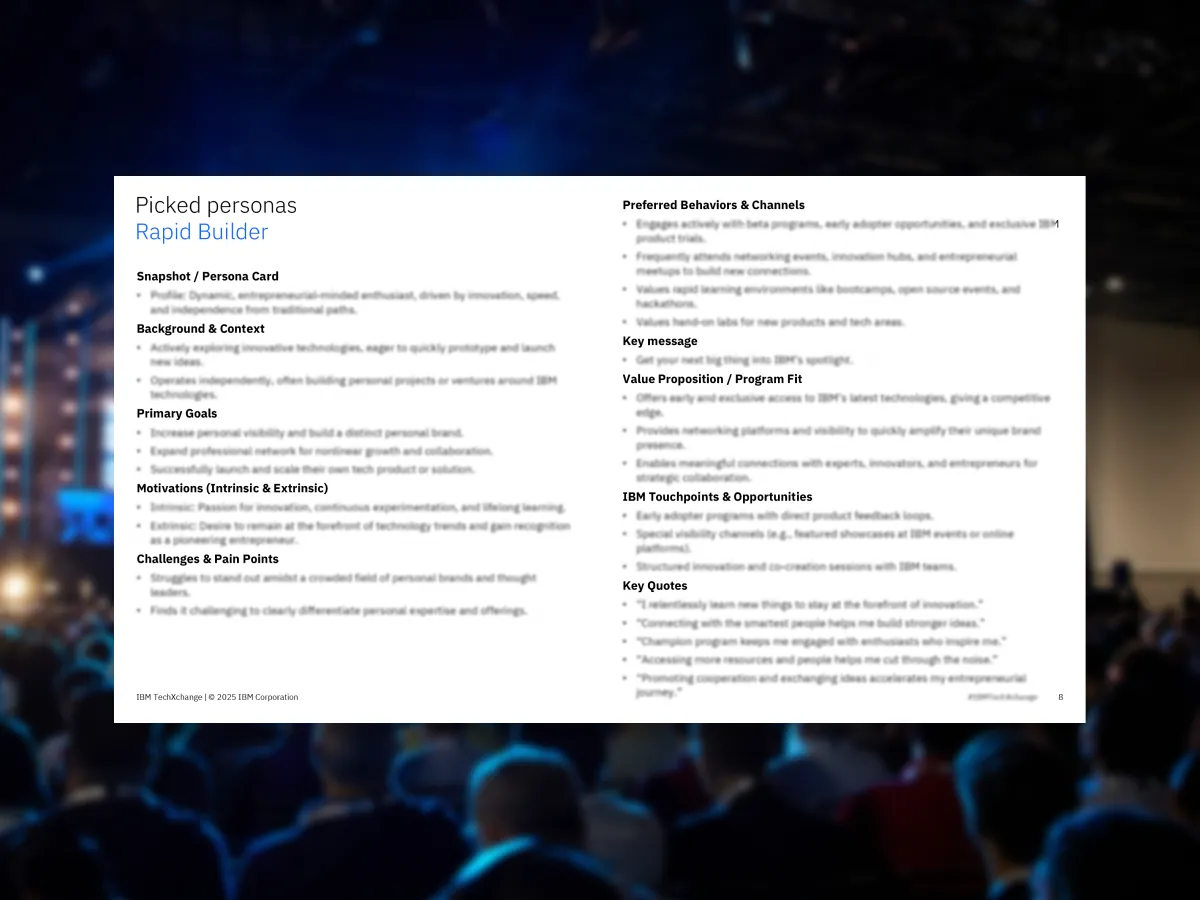
Most of the work was visual. But some briefs needed help with the message as well. We supported audience research and persona development, wrote guidelines teams could use on their own, and worked on messaging for campaigns and community stories.
Close to each team, aligned with the brand
Different teams came to us directly: a campaign for one, a conference deadline for another, a one-off request for a third. At the same time, we stayed in sync with IBM’s lead designers, so teams could move quickly without creating their own version of the brand.
Process
- Understand what each program needs and how it fits within IBM and TechXchange.
- Explore a few creative directions on one asset before the rollout begins.
- Let the IBM team make the call, then refine the chosen direction.
- Build the direction out across campaign, event, digital and physical formats.
- Update guidelines, templates and toolkits as the work exposes new needs.
- Work directly with individual teams while staying aligned with IBM’s lead designers and keeping current assets together.
Result
A single TechXchange identity that could work across programs, audiences and formats while staying connected to IBM. A collection of reusable brand and program toolkits, presentation and content templates, and a shared set of current assets that IBM teams and partners could keep using without us.
What began with one presentation template grew into a practical system supporting campaigns, conferences and the everyday creative work in between.